This is an introductory course in accounting, business, and management data analysis that will develop students’ appreciation of accounting as a language of business and an understanding of basic accounting concepts and principles that will help them analyze business transactions.

- Teacher: Belen Vargas
The course deals with the principles and practices in marketing goods and services. It also focuses on the development of integrated marketing
programs that will help grow businesses.

- Teacher: Annamarie Cabas
- Teacher: Archie Cecil Meris
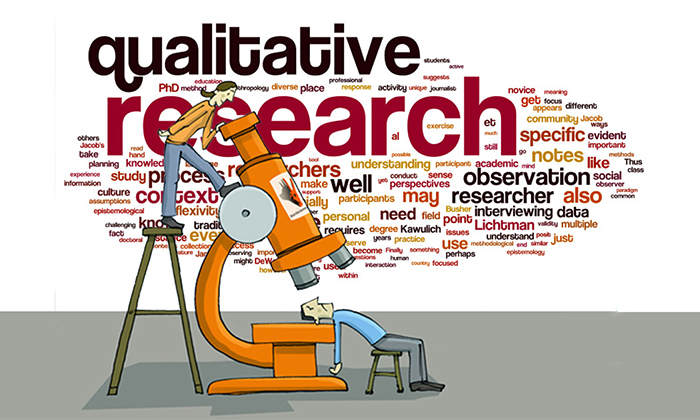
This course develops critical thinking and problem-solving skills through qualitative research.
- Teacher: MICHAELA CARCABUSO
- Teacher: GWYNETH DAUG
- Teacher: Roy Vincent Garcia
- Teacher: Cheryll Ladd Hipolito
- Teacher: Aimee Gene Danette Tadeo
- Teacher: CLOUDINE JOY TIGUE
The course introduces the students to principles of theater, music and dance and examines the practical application of the performing arts
skills in the local and global market.

- Teacher: Jethro Dolph Anongos
The course deepens the student’s awareness of art in his/her community and the rest of the nation and allows him/her to explore ways in which he/she
can contribute to the creation of a national identity using his/her knowledge and skills as an artist.

- Teacher: Cheryll Ladd Hipolito
This course aims to engage students in appreciation and critical study of 21st Century
Literature from the Philippines and the World encompassing their various dimensions, genres, elements,
structures, contexts, and traditions.
- Teacher: MICHAELA CARCABUSO
- Teacher: GWYNETH DAUG
- Teacher: Roy Vincent Garcia
- Teacher: JOANNA MARIE JOCOSOL
- Teacher: Aldrine Jay Santos
- Teacher: CLOUDINE JOY TIGUE
FCL B is the introductory course in the UPHSL Filipino Christian Living Program. It defines and explains the Catholic faith inspiration of the Founders, which became the pillars of the philosophy, vision and mission of the institution. The discussions include the Eight Perpetualite Values, the Logo, the Perpetualite Hymn and the Perpetualite Pledge. The first part covers the identity of the University and the second part covers the identity of the Perpetualite. It also introduces the students to the initiation sacraments of Baptism, Confirmation and Holy Eucharist. The experiential methodology is highlighted in the discussions on Filipino good manners and right conduct.
- Teacher: Annamarie Cabas
- Teacher: Roy Vincent Garcia
- Teacher: Cheryll Ladd Hipolito
- Teacher: Jovy Lachica
- Teacher: Archie Cecil Meris

- Teacher: Mariela Maceda
- Teacher: Henjie Quezon
- Teacher: John Mark Ricohermoso
Physical Education and Health offers experiential learning for learners to adopt an active life for fitness and lifelong health. The knowledge, skills and understanding which include physical and health literacy competencies support them in accessing, synthesizing and evaluating information; making informed decisions; enhancing and advocating their own as well as others’ fitness and health.
This course is comprised of individual, dual and team sports in competitive and recreational settings. It consists of an array of offerings which learners can choose from.

- Teacher: Jovy Lachica
The development of reading and writing skills as applied to a wide range of materials other than poetry, fiction and drama.

- Teacher: Jethro Dolph Anongos
- Teacher: MICHAELA CARCABUSO
- Teacher: GWYNETH DAUG
- Teacher: Cheryll Ladd Hipolito
- Teacher: JOANNA MARIE JOCOSOL
- Teacher: Katherine Kate Mercader
- Teacher: CLOUDINE JOY TIGUE
At the end of the course, the students must know how to find the mean and variance of a random variable, to apply sampling techniques and distributions, to estimate population mean and proportion, to perform hypothesis testing on population mean and proportion, and to perform correlation and regression analyses on real-life problems.
- Teacher: Erica Mae Marquez
- Teacher: MA. ROSALIE M. PACLEB
- Teacher: Ramchelle Aive Quintano
This course uses insights from Anthropology, Political Science, and Sociology to develop students’ awareness of cultural, social and political dynamics, and sensitivity
to cultural diversity; provide them with an understanding of how culture, human agency, society and politics work; and engage them in the examination of the
country’s current human development goals. At the end of the course, students should acquire ideas about human cultures, human agency, society and politics;
recognize cultural relativism and social inclusiveness to overcome prejudices; and develop social and cultural competence to guide their interactions with groups,
communities, networks, and institutions.

- Teacher: Jethro Dolph Anongos
- Teacher: Didrei Bulintao
- Teacher: Jean David Climaco
- Teacher: Roy Vincent Garcia
- Teacher: Mariela Maceda
- Teacher: Henjie Quezon
- Teacher: John Mark Ricohermoso
The course aims to develop practical and creative skills in reading and writing; introduce students to the fundamental techniques of writing fiction,
poetry, and drama; and discuss the use of such techniques by well-known authors in a variety of genres. Each class will be devoted to the examination of techniques and to
the workshop of students’ drafts toward the enrichment of their manuscripts. Students learn how to combine inspiration and revision, and to develop a sense of form.

- Teacher: GWYNETH DAUG
This course introduces the students to the basic concepts and vital elements of politics and governance from a historical-institutional perspective. In
particular, it attempts to explain how the important features of our country’s political structures/institutions, processes, and relationships developed across time. In the
process, the course helps the learners gain a better appreciation of their rights and responsibilities as individuals and as members of the larger sociopolitical community to
strengthen their civic competence

- Teacher: Didrei Bulintao
At the end of the course, the students must know how to determine the limit of a function, differentiate, and integrate algebraic, exponential,
logarithmic, and trigonometric functions in one variable, and to formulate and solve problems involving continuity, extreme values, related rates,
population models, and areas of plane regions.
- Teacher: Erica Mae Marquez
- Teacher: MA. ROSALIE M. PACLEB
This subject is designed to enhance the understanding of the principles and concepts in the study of biology, particularly heredity and variation, and
the diversity of living organisms, their structure, function, and evolution.

- Teacher: Jean David Climaco
- Teacher: Harvey Macha
- Teacher: Habagat Payno
- Teacher: Aimee Gene Danette Tadeo
This course is designed for a high school student to develop knowledge, skills
and attitude to perform the tasks on Tour Guiding Services. It covers core competencies namely; 1) research information relevant to tour itinerary; 2) managing tour
arrangements for visitors; and 3) accompanying visitors in accordance with the tour itinerary. It also includes provision for on-the-job training in Tour Guiding Services.
The preliminaries of this specialization course includes the following: 1) Explain core concepts in tour guiding services ; 2) Discuss the relevance of the course 3) Explore on
opportunities for a Tour Guide as a career

- Teacher: DIELIEAN SALDO
This is an introductory and specialization course to Animation which covers Personal Entrepreneurial Competencies
(PECs); Environment and Market; five (5) Common Competencies; and one (1) Core Competency that a high school student ought to possess to produce clean-up and
in-between drawings.

- Teacher: Jayson Rivera
This is an exploratory and introductory course which covers five common
competencies that a Grade7/Grade 8 Technology and Livelihood Education (TLE) student ought to possess: 1) use of tools; 2) maintaining tools, equipment and
paraphernalia; 3) performing mensuration and calculation; 4) interpreting technical drawing and plans; and 5) practicing Occupational Health and Safety (OHS) procedures.

- Teacher: Jayson Rivera